
One of India’s finest and fastest overseas operations. When several countries declined to help the Maldives to prevent a coup, citing less armed force and time barrier, India took a big step within hours.
This overseas operation by Indian armed forces will be remembered always as one of the fastest and finest. When Maldives was facing an attempt of a coup by a group led by Abdullah Luthufi with the help of PLOTE ( People’s Liberation Organization of Tamil Eelam).
Around 80 mercenaries landed in Male, the national capital of Maldives, on the night of 2-3 November 1988, they captured important installations like airports, government buildings, radio stations, and ports. Then they headed towards the Presidential Palace, meanwhile, President Gayoom was rescued by Maldivian forces to the safe house. Then the mercenaries captured the Presidential Palace and kidnapped the Maldivian Education Minister as a hostage.
Maldivian President Gayoom asked for military intervention from Pakistan and Sri Lanka, but they denied citing lack of armed forces. Singapore declined to help the Maldives and the United States of America told the Maldives that it will take them 2–3 days to reach Male for the help. Then-President Gayoom talked to the United Kingdom which advised seeking help from India.
After getting disappointment from other countries, Maldives looked towards India with optimistic eyes, and contacted then Prime Minister Rajiv Gandhi for the help to overcome of this coup threat. India accepted the request from the president and an emergency meeting was immediately arranged in New Delhi. Within hours, India was ready for their operation to overcome coup in Maldives.
On 3rd November 1988, India intervened in Maldives threat with “Operation Cactus”. IL-76 aircraft of the Indian Air Force airlifted the Parachute Brigade, and the Parachute Field Regiment and flew them non-stop over 2,000 km to the Male International Airport. The Indian Armed Forces arrived within hours after the appeal. Meanwhile, the Indian Naval Ships were diverted towards Male at full speed and naval aircrafts established surveillance over the Maldives Islands.
The Indian paratroopers took over the control of the airfield as soon as reach there. The mercenaries were stirred as soon as the intervention of Indian security forces came to know to them. The Indians overthrew the capture of the mercenaries in unprecedented ways by demonstrating their valor on each and every part of the capital.
The Indian armed forces handed over the control of the Male to President Gayoom’s government in the morning hours of 4th November after vanishing the aspirations of mercenaries. Some of the mercenaries fled toward Sri Lanka in a hijacked cargo ship named “MV Progress Light” with the hostages including Maldivian Education Minister.
Considering it a mid-ocean operation, the most challenging part of the operation was to rescue the hostages on the hijacked ship. Indian Naval Forces were in the action now.
Indian Navy was immediately informed about the mercenaries carrying hostages. Indian Navy immediately deployed its forces to intercept “MV Progress Light”.
On the morning of 4th November, Indian Naval aircraft confirmed the detection of Progress Light. Negotiations started to liberate hostages.
INS Godavari and INS Betwa were deployed to deal with the situation.

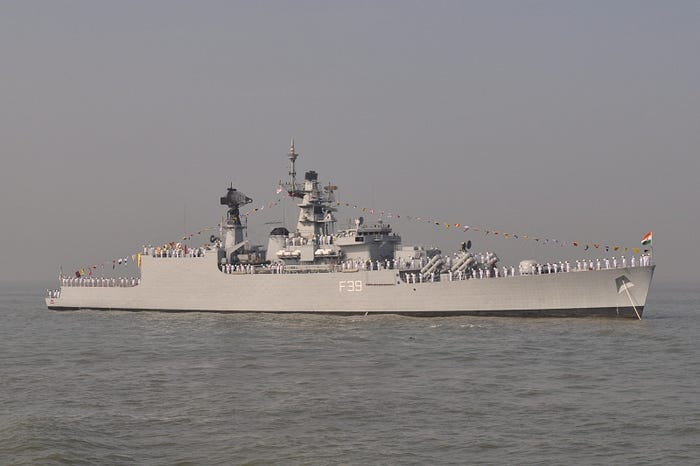
On 5th November, the negotiators were unable to stop MV Progress Light from heading towards Sri Lanka. The Sri Lankan government refused to allow the hijacked cargo ship in the Sri Lankan waters.
On the morning of 6th November, after giving the final warning, when hijackers on MV Progress Light didn’t respond positively, the Indian Navy started a small arms fire, air-dropped depth charges ahead of the ship, and a gun broadside across the bows. When MV Progress Light still refused to stop, then a broadside was fired on the forward cargo section. The ship stopped immediately.

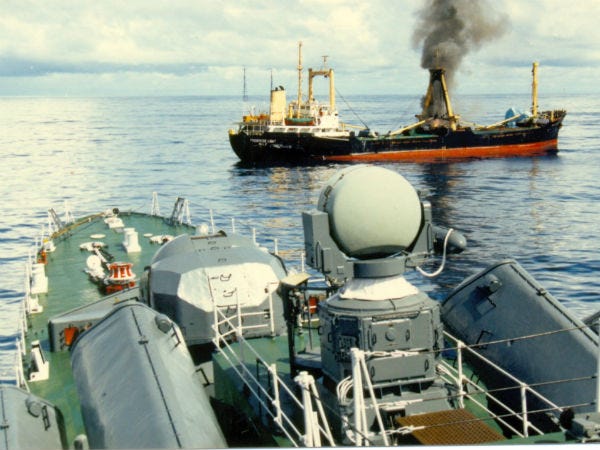
Indian Naval Forces rescued the hostages from the hijacked ship. The mercenaries were handed over to the restored Maldives government. Burning MV Progress Light, sank on 7th November.
The mission was declared successful in the war room at New Delhi that was closely monitoring the situation.
The operation had a global impact. India emerged as the regional power of South Asia. Leaders of all over the world including the US and UK had also lauded India’s role in this threat.
Resources- Indian Navy Website and Wikipedia
Comments
Post a Comment